
- Blogs

- 10 Best Jobs for Nursing Students

10 Best Jobs for Nursing Students
The best jobs for nursing students combine real patient interaction with a schedule that works around your coursework. Entry-level healthcare roles like Certified Nursing Assistant, phlebotomist, and medical scribe consistently rank at the top because they deliver hands-on clinical exposure while paying a competitive hourly rate. Students who hold these positions during school enter the job market with a measurable edge over those who do not.
According to the U.S. Bureau of Labor Statistics, registered nursing is projected to grow 5% from 2024 to 2034, with about 189,100 job openings each year, on average, over the decade. That level of demand sounds reassuring, but healthcare recruiters still prioritize candidates with documented clinical experience and verified patient contact hours.
Every semester you spend working alongside real patients is a semester your resume pulls further ahead, and this article covers exactly where to start. (For more on how supervised patient care works in school, see our guide to preparing for nursing clinicals.)
Why Is Having a Job While Studying Nursing a Good Idea?

Working in a healthcare setting during nursing school puts you ahead in real, measurable ways. Healthcare employers have shown a clear trend toward hiring nursing students for part-time roles, and they consistently prefer candidates who already know how clinical environments work.
Part-time jobs for nursing students often come with flexible scheduling (evenings, weekends, or per diem hours) that fits naturally around a full course load.
Professional connections you build on the job typically lead directly to employment offers after graduation. A supervisor who sees your work ethic up close is, frankly, one of the strongest professional references you can have on file.
The financial side matters too. Working even two or three shifts a week can meaningfully offset tuition costs over a two- or four-year program, and many facilities offer tuition reimbursement for nursing students on top of an hourly wage.
Before accepting any student healthcare role, ask your potential employer:
- Whether shifts can flex around exam periods and clinical rotations
- How much direct patient contact the role actually involves
- Whether the facility offers tuition assistance or employee education benefits
- If the role counts as clinical experience or patient contact hours on a nursing job application
Most facilities that regularly hire nursing students are fairly used to these conversations, so asking upfront is always worth doing.
The 10 Best Jobs for Nursing Students at a Glance
This comparison table is structured for a featured-snippet (table) opportunity — keep it near the top of the page.
| # | Job | Typical Hourly Pay | Certification Needed? | Best Fit For |
|---|---|---|---|---|
| 1 | Certified Nursing Assistant (CNA) | $15–$18 | Yes (state exam) | Bedside / med-surg tracks |
| 2 | Patient Care Technician | $15–$20 | Preferred | ER, critical care, dialysis |
| 3 | Phlebotomist | $17–$21 | Often required | Lab, procedural confidence |
| 4 | Medical Scribe | $15–$20 | No | Documentation, diagnostics interest |
| 5 | Home Health Aide | $12–$15 | Training preferred | Independent, relationship-based care |
| 6 | Mental Health/Psychiatric Technician | $11–$14 | No | Psych / community health nursing |
| 7 | Hospital Unit Clerk | $12–$21 | No | Understanding unit operations |
| 8 | Orderly/Patient Transporter | $11–$20 | No | Broad hospital exposure |
| 9 | Summer Camp Nurse Assistant | $14–$18 | No | Pediatrics / community health |
| 10 | Medical Assistant | $15–$21 | Preferred | Clinical + administrative skills |
| ★ | Emergency Medical Technician (EMT) | $16–$22 | Yes (NREMT) | Emergency / critical-care tracks |
Hourly ranges reflect typical entry-level pay for students. Median annual wage figures cited throughout are from the U.S. Bureau of Labor Statistics, Occupational Outlook Handbook (May 2024).
The 10 Best Jobs for Nursing Students
These ten student nurse positions cover a wide range of clinical and support settings. Some require a short certification course, yet most are accessible to students who are still mid-program.
Each role below includes a general pay range, so you can factor earnings into your decision alongside the clinical experience each position offers.
1. Certified Nursing Assistant (CNA)
A CNA assists patients with daily care tasks, including bathing, feeding, vital sign monitoring, and mobility support under registered nurse supervision. RN student jobs in this category are in very high demand, and hospitals typically view CNA experience as a strong indicator of hands-on readiness for patient-facing work.
Pay ranges from $15 to $18 per hour; the BLS reports a median annual wage of $39,430 for nursing assistants. Graduates with this background on their resume often move into staff RN roles faster than those starting with no clinical work history.
How to start: CNAs must complete a state-approved training program (typically 4 to 12 weeks) and pass a state competency exam covering clinical skills and a knowledge test before they can work.
2. Patient Care Technician

A Patient Care Technician carries out many of the same duties as a CNA, yet the role frequently adds procedures like electrocardiograms (ECGs) and blood glucose monitoring to the mix. These positions are common in hospitals and dialysis units, and pay typically ranges from $15 to $20 per hour.
The additional procedures you learn as a technician give your skill set a somewhat broader clinical base early on. Students drawn to high-acuity settings sometimes pair this role with a monitor (telemetry) technician or dialysis technician position to deepen their exposure to critical-care workflows.
How to start: Requirements vary by employer; many prefer a certified patient care technician (CPCT) credential, while others train on the job. Some hospitals accept an existing CNA certification as a starting point.
3. Phlebotomist

Phlebotomists draw blood, process specimens, and confirm patient identification before each collection. This role builds your confidence with clinical procedures quite quickly, and direct patient communication is a core part of the job on virtually every shift.
Some positions require a formal phlebotomy certification, and others will train you on the job. Pay generally falls between $17 and $21 per hour; the BLS lists a median annual wage of $43,660 for phlebotomists.
How to start: Many states require a nationally recognized phlebotomy certificate to work independently; certification courses can run as short as a few weeks. Other employers provide paid on-the-job training.
4. Medical Scribe

A medical scribe documents physician notes, patient assessments, and treatment plans in real time at the point of care. You naturally absorb medical terminology, diagnostic reasoning, and how providers structure clinical thinking, all of which reinforce what you cover in class in a very direct way.
Pay ranges from $15 to $20 per hour. Students with strong typing skills and a genuine interest in clinical documentation tend to find this a good fit. Because much scribe work is now done virtually, it is also one of the better remote jobs for nursing students who need maximum schedule flexibility.
How to start: No certification is required. A high school diploma, solid typing speed, and a short employer training program on medical terminology and documentation are usually enough to begin.
5. Home Health Aide
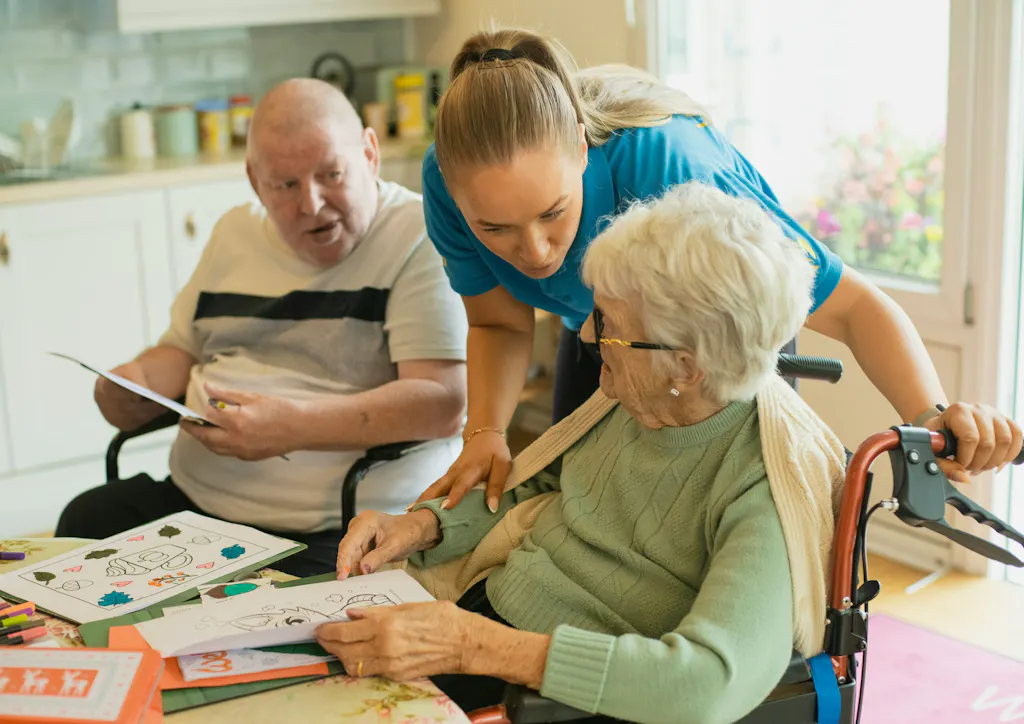
Home health aides work one-on-one with patients in private homes, helping with daily activities under nurse supervision. The independence of this role teaches you to observe closely and respond to changes in a patient’s condition in a fairly self-directed setting.
Pay typically falls between $12 and $15 per hour; the BLS reports a median annual wage of $34,900 for home health and personal care aides. Sustained, direct care relationships like this build a quality of patient rapport that carries over strongly into bedside nursing.
How to start: Requirements vary by state. Some require a short training program and certification, especially for agency or hospice work, while others allow employer-provided training with only a high school diploma.
6. Mental Health/Psychiatric Technician
Mental health technicians support patients in psychiatric units or residential facilities alongside licensed clinicians. Your responsibilities typically include monitoring patients, assisting with daily routines, and practicing therapeutic communication and de-escalation techniques.
Pay averages between $11 and $14 per hour, varying by facility. Demand here is rising quickly: the BLS projects psychiatric technician employment to grow about 20% from 2024 to 2034, well above the all-occupation average. Students drawn to mental health or community health nursing tend to find this role a particularly strong match for their long-term goals.
How to start: Most entry-level roles require only a high school diploma plus on-the-job training in de-escalation and safety. Some states and facilities prefer or require a psychiatric technician certificate.
7. Hospital Unit Clerk
A hospital unit clerk manages the administrative side of a nursing unit: handling phones, patient records, orders, and general coordination for the team. You get a clear, ground-level view of how a unit actually runs, and that kind of context is genuinely useful for your future nursing work.
Pay ranges from $12 to $21 per hour, and some hospitals rotate clerks across departments for broader specialty exposure. (Note: unit clerk hours usually count as general healthcare experience rather than documented clinical patient contact hours — confirm with your program.)
How to start: Most unit clerk roles require only a high school diploma and on-the-job training. Familiarity with medical terminology or electronic health records is a plus but rarely mandatory.
8. Orderly/Patient Transporter
Orderlies and patient transporters move patients between departments, sanitize rooms and equipment, and support the care team with general tasks throughout the facility. You interact with staff and patients across virtually every unit in the building on any given shift.
Pay typically falls between $11 and $20 per hour. The broad exposure to hospital operations makes this a solid option for students who want a wide overview before they specialize.
How to start: A high school diploma and on-the-job training are typically all that’s needed. Some employers require a current CPR or Basic Life Support (BLS) certification before your first shift.
9. Summer Camp Nurse Assistant

Camp nurse assistants work alongside the on-site camp nurse, supporting medication distribution, wound care, and health monitoring throughout the camp season. Students interested in pediatrics or community health often find this setting a natural match.
Pay generally sits between $14 and $18 per hour. Some camp settings include health education activities with campers and staff, adding a bit of public health experience to the role overall.
How to start: Formal certification usually isn’t required, though camps often prefer applicants with CPR/first-aid certification and may favor students who have completed CNA or first-year clinical coursework.
10. Medical Assistant
A medical assistant works in a clinic, physician’s office, or outpatient center, performing both clinical tasks (taking vital signs, drawing blood, assisting with exams) and administrative ones (scheduling, charting, and patient intake). That dual exposure makes it one of the most well-rounded entry-level healthcare jobs for a future nurse, since you build patient-care skills and learn how a practice actually operates.
Some employers train on the job, while many prefer a medical assistant certification. Pay typically falls between $15 and $21 per hour; the BLS reports a median annual wage of $44,200 (about $21.25/hour) for medical assistants, with medical assistant employment projected to grow 12% from 2024 to 2034 — much faster than average. The clinical-plus-administrative skill set translates cleanly into the documentation and patient-flow realities of staff nursing.
How to start: Many employers hire with a high school diploma and train on the job, though a certified medical assistant (CMA, CCMA, or RMA) credential is increasingly preferred and can be earned in roughly 8 to 12 months.
Bonus Role: Emergency Medical Technician (EMT)

An EMT is a first responder who assesses patients, takes vital signs, controls bleeding, performs CPR, and assists paramedics during transport — usually on an ambulance or in an emergency setting. For nursing students drawn to emergency or critical-care nursing, no other student role matches the exposure to acute, fast-paced decision-making that an EMT shift delivers.
Pay typically falls between $16 and $22 per hour and varies widely by region and call volume. The high-acuity judgment you build here maps directly onto ER, ICU, and trauma nursing tracks.
How to start: EMTs must complete a state-approved EMT training program (often one to two semesters) and pass the National Registry of Emergency Medical Technicians (NREMT) exam to become certified. Because of that upfront training, it suits students who can commit before or early in their program rather than mid-clinical.
Which of These Jobs Will Actually Help Your Nursing Career?
The most valuable role is the one that lines up with where you want to end up. A nursing student externship is a more structured option worth exploring alongside the roles listed above. These are formal, hospital-sponsored programs that place you in a specific department for a defined period, often with senior nurse mentorship included.
Your intended specialty is a very practical filter for narrowing down your options. (If you’re still weighing options, our list of nursing specialties walks through the duties, settings, and earning potential of each.) Students drawn to emergency or critical care tend to get the most out of patient care technician, monitor technician, or EMT roles, since the pace and acuity of those settings mirror what they’ll face as registered nurses. Students leaning toward pediatrics or community health, on the other hand, often find summer camp nurse assistant or school health roles a more direct match.
Mental health nursing students typically gain the most from psychiatric technician positions, where therapeutic communication is a daily requirement rather than an occasional skill. If you’re already thinking several steps ahead, our guide to choosing the right advanced nursing degree can help you connect today’s student role to a longer-term career path.
Staying on top of your coursework at the same time is a real challenge. Tools like Archer Review’s unlimited readiness assessments let you check in on your progress regularly and adjust your study focus on the go, so that your working hours stay separate from your NCLEX exam preparation.
Here are some signs that a role aligns well with your specialty goals:
- The patient population matches your intended area of nursing practice
- Senior staff includes licensed nurses who actively mentor students on the floor
- The role involves direct patient contact on most or all of your shifts
- The facility has a history of moving student workers into staff positions after graduation
How to Choose the Right Job for Your Situation
With so many options, a simple decision order keeps the choice from feeling overwhelming. Work through these priorities in sequence:
- If your program counts patient contact hours, prioritize direct-care roles (CNA, PCT, phlebotomist) over administrative ones, since those hours can do double duty on your transcript and your resume.
- If you’re entering a heavy clinical semester, favor flexible or remote roles (medical scribe, per diem home health, unit clerk) that let you scale hours down without quitting.
- If you already know your specialty, match the setting to it — high-acuity roles (PCT, EMT, monitor tech) for ER/ICU hopefuls, psychiatric tech for mental health, camp or school roles for pediatrics and community health.
- If you’re undecided, pick a broad-exposure role (orderly/transporter or unit clerk) that lets you observe many departments before you commit.
- If cost of entry matters, start with a no-certification role (scribe, transporter, aide) and layer on a certification like CNA or phlebotomy once you’ve confirmed the fit.
The goal isn’t to find a single “best” job; it’s to find the role whose schedule, patient contact, and specialty exposure line up with where you are right now.
How Do Working Nursing Students Manage Their Time?

Time management is one of the more practical skills you will build during nursing school, and working a part-time job actually tends to sharpen it. Students who have set work schedules often find they are more structured with their study blocks than students with completely open calendars. (Our guide to managing your time as a student breaks down scheduling tactics in more depth.)
A few strategies work particularly well for students balancing shifts and coursework. Blocking study time immediately after class, before fatigue sets in later in the day, tends to be more effective than trying to catch up on the weekend. Protecting your downtime matters just as much — our guide on how to reset during a nursing school break without burnout covers recovery habits that keep working students from running on empty.
Mobile study tools are similarly useful here. Short practice sessions during a lunch break or commute keep information fresh without requiring large chunks of uninterrupted time, and they’re a good way to start building the NCLEX test-taking strategies you’ll lean on later.
Communicating early with your employer about exam weeks is also a very reasonable step, and most healthcare facilities that regularly hire students are used to accommodating these requests.
Some practical habits that working nursing students rely on include:
- Scheduling study blocks at the same time each day to build a consistent routine
- Using a weekly planner to map shifts, clinical hours, and assignment deadlines together
- Treating days off from work as dedicated high-focus study days rather than rest days
- Letting supervisors know about major exam dates at least two weeks in advance
Frequently Asked Questions
Can Nursing Students Work Full-Time at a Job?
Full-time work is very difficult during a full nursing program, given the clinical hours, labs, and high-stakes exams on top of coursework. Most working students choose part-time roles of 15 to 20 hours per week, and weekend or overnight shifts often give the best balance of income and study time.
What Is the Highest-Paying Job for a Nursing Student?
Among accessible student roles, phlebotomists and medical assistants tend to pay highest, often $17 to $21 per hour. Patient care technicians and hospital unit clerks can reach the low $20s in some hospital systems. Pay varies by region, facility type, and certification.
Do Employers Count Student Healthcare Roles as Clinical Experience?
Many employers count direct-care student roles like CNA, patient care technician, or phlebotomist work as clinical experience on a nursing job application. Administrative roles like unit clerk usually count as general healthcare experience instead. Check with your school advisor on how your program defines clinical and patient contact hours.
How Many Hours Per Week Is Realistic for a Working Nursing Student?
Most advisors recommend keeping paid work to around 15 to 20 hours per week. Students in demanding clinical semesters sometimes drop to 10 hours or fewer to protect their grades. Your course load, energy levels, and personal responsibilities all shape what’s manageable week to week.
Do Any of These Roles Require Extra Certification Before Starting?
Some do. CNAs must pass a state competency exam, phlebotomists in many states need a recognized certificate, and EMTs must pass the NREMT exam. Roles like orderly, transporter, unit clerk, and medical scribe generally require only a high school diploma and on-the-job training.
Can a Healthcare Job Strengthen a Nursing School Application?
Yes. Admissions committees view documented healthcare work favorably, and candidates with real patient contact often stand out in competitive applicant pools. Some programs even list verified patient contact hours as a formal application requirement.
Are There Remote Jobs for Nursing Students?
A few exist. Virtual medical scribe positions and some telehealth-support or medical administrative roles let you build terminology and documentation skills from home. Hands-on clinical roles require on-site shifts, so most students pair a remote role with at least one patient-facing job.
What Should a Nursing Student Put on a Resume From These Roles?
Focus on specific tasks, not just job titles: the patients you cared for, procedures you assisted with, and your typical patient load. Measurable details like “assisted with care for 8 to 10 patients per shift” impress hiring managers most. See our guide on how to write a stellar nursing resume.
Do These Roles Stay Relevant After Becoming a Registered Nurse?
Very much so. Hiring managers see a direct line between a student who worked as a CNA or PCT and a new-grad nurse who already understands patient care. The facility where you worked may even offer you a staff position after you pass the NCLEX.
Is It Worth Taking a Lower-Paying Healthcare Job Over a Higher-Paying Non-Clinical Role?
Usually, yes. A lower-paying clinical role builds the bedside skills and experience hiring managers want at graduation, which a higher-paying non-clinical job won’t. Students in patient-facing roles typically find the transition into staff nursing far smoother than those with no clinical background.
How Do You Find Healthcare Jobs That Are Open to Nursing Students?
Start with hospital and health-system careers pages, which often post student-specific openings. Your school’s career services office and clinical placement coordinators can point you to local facilities that hire from their own student pool. Nursing-focused job boards that flag student-eligible roles are also worth checking.
Find Your Edge Before You Graduate
The jobs for nursing students outlined here each offer a distinct mix of clinical exposure, earning potential, and schedule flexibility. Choosing a role aligned with your intended specialty gives you a stronger professional foundation well before graduation day arrives.
Working while studying demands study tools that deliver results efficiently. Archer Review, trusted by over 960,000 students, offers unlimited Computer Adaptive Testing, unlimited readiness assessments, and a verified 98.98% pass rate among 2024 users. That combination of data-driven preparation and proven outcomes is what sets Archer Review apart.
Register today and pair real-world clinical experience with the exam confidence to match.