
- Blogs

- Everything to Know Before Nursing School Starts, From Real Nurses

Everything to Know Before Nursing School Starts, From Real Nurses
By Rachel Taylor, MSN, BSN, RN
Most people getting ready for nursing school picture day one as the hardest part. In practice, the most useful things to know before nursing school starts are the habits you build in the weeks beforehand, since those carry you once the semester actually starts.
I’ve spent enough time around new nursing students, as Director of Nursing Services here at Archer Review and as an adjunct instructor, to see the same pattern over and over. The students who feel steady in their first semester built the same handful of habits early: a real planner, the right supplies, a study system that works, and a mindset they actively look after.
I put this together with three colleagues on Archer’s nursing team: Dr. Morgan Taylor, DNP, CPNP-PC, BSN, RN, CCRRN, Chief Nursing Officer, Shelley Cundick, RN, BSN, a clinical educator, and Dr. Jennifer Bonner, DNP, APRN, CNM, RN, SANE. All four of us went through nursing school ourselves, and now we spend our careers teaching students going through it too.
Build a Planner Before You Need One
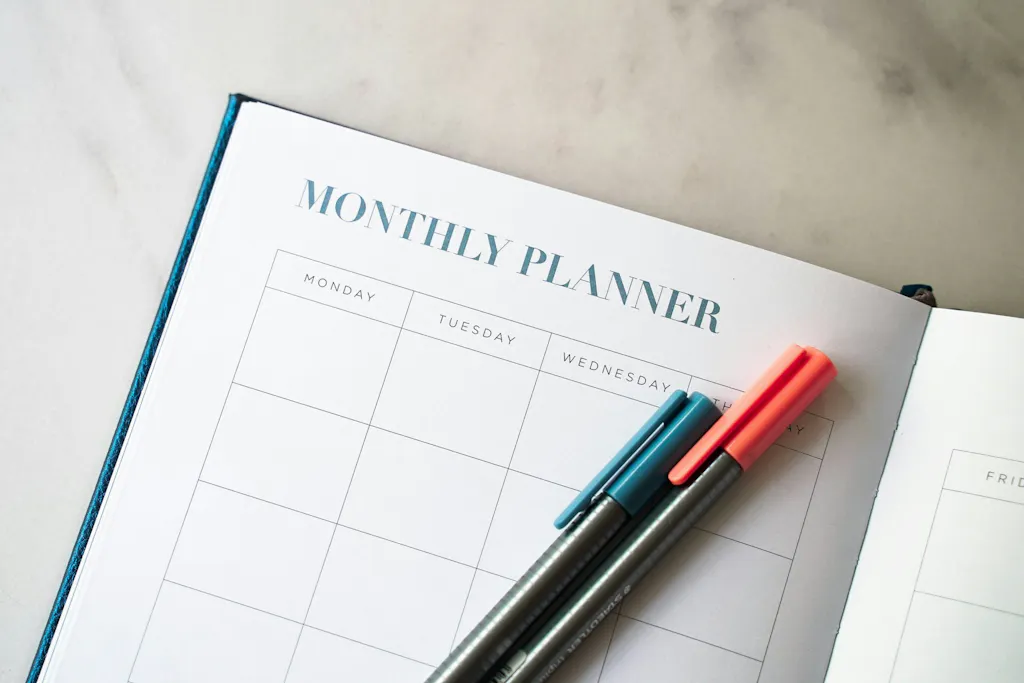
Between reading assignments, skills checkoffs, exam dates, and clinical rotations that can shift with little warning, nursing school gives you more to track than most people are used to. Build a planner with a weekly layer for every hard deadline the moment it’s announced, and a daily layer that works backward from those deadlines into specific tasks, like reading a particular chapter rather than a vague goal like “study for med-surg exam.” A specific task tells you exactly where to start, so it’s far less likely to get pushed to tomorrow.
Morgan Taylor, DNP, CPNP-PC, BSN, RN, CCRN, the host of Archer Review’s Pulse Check podcast, built hers this way through nursing school. Dr. Jennifer Bonner adds color coding for each course, since tying color to a category helps the brain sort information faster. Keep personal commitments on the same planner too, like lunch with a friend, an hour to exercise, or a shift at one of the flexible jobs for nursing students that fit around a full course load, since those carry the same weight as your next clinical shift.
Paper or digital comes down to how you process information, and either can fail you if you don’t check it often. I use paper with phone reminders as backup, so a deadline shows up twice instead of vanishing on a day I never opened it. If you reach for your phone constantly, start digital and add a paper weekly view for the big picture.
Gather Your Supplies Before the Semester Starts
The right supplies depend less on the brand you buy and more on what you’ll actually keep using once the semester gets packed. Archer’s own starter kit lists sixteen items across supplies, tech, and clinicals, and the ones worth buying before day one are the ones you will reach for daily, like your planner, a water bottle, pens and highlighters, and your stethoscope. The one-time purchases like a labeled binder, sticky notes, and a foldable clipboard can wait until you actually need them. Working from a full nursing school checklist makes it easier to spot which items are truly needed before you overspend on supplies you only touch once.
Choose Your Textbooks and Note-Taking Tools

I’ll tell you what I did wrong first. My classmates and I brought a literal luggage bag to carry our textbooks, since they didn’t fit in one backpack. Wait until you know which textbooks your instructors actually use day to day, then buy accordingly. Index cards were my next mistake, since writing them out by hand took too long during a busy week. A note-taking app you can pull up on your phone, tablet, or laptop gets used more consistently, simply because it’s faster to open. Pair that with a highlighter system and a labeled notebook for each class and you’ve got a setup that holds up. Once you have the right books, our guide on reading strategically instead of cover to cover can help you get more out of them from week one.
Get Your Bag Ready and Find Comfortable Shoes for Clinical Days
Make sure your clinical bag is ready to go on day one, packed with a watch that has a second hand, a penlight, and bandage scissors. While you’re running around getting your clinical bag together, add a nice pair of comfortable shoes to the shopping list, they’ll come in clutch on clinical days. I’d skip the cutest pair on the shelf in favor of ones you can actually walk in for twelve hours, since that’s what’s going to count by hour ten. Morgan learned this one the hard way by wearing a pair of clunky clogs that everyone at her school wore. She ended up trading those heavy shoes for plain sneakers that were less cute but far kinder to her back. For the fuller supply list, including what to pack for food during a long clinical day, our guide on preparing for nursing clinicals covers it in more depth.
How to Study in Nursing School Without Wasting Hours

The most effective way to study in nursing school is to follow a simple, repeatable loop. It’s the same approach we teach in Archer Review coursework: learn the material, test yourself right away, review every answer, and remediate the topics you missed. Nursing exams ask what you would do for a patient in a specific clinical situation far more often than they ask you to simply define a term.
Students who start using this process in their first unit can identify their weaknesses early and walk into exams knowing where they stand. That is very different from finding gaps in knowledge on test day and spending the semester trying to catch up. This study loop can make the difference between whether you pass nursing school exams on the first try or end up retaking them.
Consume the Material, Then Test Yourself on It
Shelley Cundick, our nursing clinical educator, recommends doing practice questions right after a video or a lecture, so you know immediately what stuck and what didn’t. Nursing questions are built around a client scenario, not a fact to recall, so answering a question right after a lesson helps you find out whether you can apply what you just learned. It’s one of the simplest nursing school study tips to actually put into practice.
Remediate by Tracking What You Get Wrong
Personally, I encourage every student I work with to review every practice question, not just the ones they missed. A lucky guess can hide a gap just as easily as a wrong answer, and asking why the right answer was right builds clinical judgment better than the grade alone. Keep a notebook log with one line per question, noting exactly what you missed and why. This kind of tracking is at the center of how to study in nursing school without wasting time on methods that don’t work, and by midterms it becomes your own study guide built around your weak spots. Look for patterns across tests too: missing the same type of question points to a gap in strategy and missing the same content area points to a gap in understanding.
Find the Right Study Group for Nursing School

I also recommend studying with a group when you can. Start with classmates who have similar goals and approaches to learning, and give each session a specific goal along with a rotation of who explains a topic. Teaching a concept back this way is one of the more useful study habits for nursing students. If a session keeps drifting into unrelated conversation, that usually means the goal wasn’t clear going in. With all that in place, group study holds up as one of the better nursing school study tips worth trying.
Protect Your Mindset and Survive Nursing School
Surviving nursing school comes down to a handful of small habits, and our starter kit linked below includes a page of mindset advice built around exactly that. The one piece I go back to most is simple. When you’re overwhelmed by your task list, break it into smaller goals and focus on just the first three. Checking something off, even retroactively on a sticky note for a task you just finished, builds enough momentum to carry you into the next task on your list.
Build One Non-School Block Into Every Week
Set aside at least one to two hours a day for something outside of school, and put it on the calendar with the same seriousness as a clinical shift. Rachel had a baby during nursing school and made sure part of every day belonged to her daughter and nothing else, which is what kept her from completely burning out. Morgan found she could hold deep focus for about three hours before her effectiveness dropped off, no matter how much work was still in front of her. Shelley got married exactly one week before nursing school started and managed by studying in three-hour blocks with a twenty-minute break in between, rewarding herself afterward with something small, like a walk, a snack, or dinner with her husband. For the longer breaks between semesters, our guide on how to reset during nursing school break covers how to actually rest without falling behind.
How to Handle Test Anxiety in Nursing School
Test anxiety and study anxiety show up far more often than students admit. The instinct is to push through it and keep studying, but that works against you, since your brain has a much harder time thinking clearly once you’re in a fight, flight, or freeze response. The better move is to pause when it shows up and name what’s happening before getting back to the material. Talking about it early with a study group or instructor can help, since most people around you are quietly struggling with the same thing. Our guide on NCLEX® test-taking strategies covers more ways to manage that pressure once you’re actually sitting in front of an exam.
Turn Your Notes Into a Nursing Concept Map
A nursing concept map is a visual way to organize clinical information, so you can see how the pieces relate to each other. You might place a medical diagnosis in the center, then branch out to signs and symptoms, pathophysiology, labs, nursing diagnosis, education, and nursing considerations and interventions, as shown in the concept map template included as part of our nursing school starter kit. Because thorough maps take time, I use them each week for my two weakest or most frequently missed concepts.

On test day, I’ve had moments where I couldn’t recall a fact I’d memorized, but I could still picture exactly where it sat on my map, and that was enough to answer the question correctly. Jennifer adds another layer by folding memory aids directly into the branches. For antihypertensives, she groups medications that share a suffix and gives the group a short nickname, like calling her ARBs “pirate medications,” and that kind of silly detail tends to stick during an exam. That kind of grouping by drug class carries well beyond ARBs, and our guide to nursing pharmacology basics walks through the same suffix-spotting trick for other drug families.
A Nursing School Checklist to Work Through Before Day One
Go through this checklist of things to know before nursing school and you’ll be ready for what usually catches new students off guard.
- Set up a planner with a weekly view for deadlines and a daily view that breaks them into specific tasks.
- Choose a note-taking system, either a labeled notebook per class or a synced note app, plus a highlighter system.
- Make sure you have shoes that can handle a twelve-hour shift before your first clinical rotation.
- Build a study loop around reviewing material, testing yourself right away, going over each answer (including the ones you guessed correctly), and remediating what you missed.
- Keep a notebook log of what you miss on practice questions, so it becomes a study guide by the end of the semester.
- Set aside at least one to two hours a day for something outside of school.
- If anxiety comes up during a test, pause, name it, and talk about it with a study group or instructor.
- Limit concept maps to your one or two toughest concepts each week.
This checklist covers the essential things to know before nursing school starts, and Archer’s nursing school kit goes further, with the complete supply list, mindset and wellness tips, and a testing toolkit you can download for free and keep on hand all semester.
Frequently Asked Questions About Starting Nursing School
The following FAQs cover a few more things to know before nursing school starts.
Is It Normal to Feel Unprepared Before Your First Day?
Yes, and it’s about as universal a feeling as nursing students report. Even students with a strong science background describe doubting whether they’ll make it through the first semester. That doubt has nothing to do with whether you’re cut out for the program, and it fades once coursework starts.
What Does the First Week of Nursing School Actually Look Like?
Expect uniform fittings, a stack of syllabi, and orientation for the first couple of days. Skills training starts fast after that: some students role-play patient conversations or practice blood pressure checks within the first two or three days, often relearning a technique they thought they had down. Exhaustion is the most common feeling that week, and it passes.
What Are the Most Important Things to Know Before Nursing School Starts?
The most important things before nursing school starts are the systems you build ahead of time: a planner that can handle a schedule that shifts on short notice, supplies you’ll actually use daily, a few reliable nursing school study tips like a practice-question study loop, and a plan for protecting your mindset early.
Nursing School Advice to Take With You
Download our nursing school starter kit, including three bonus cheat sheets covering ground I haven’t gotten to above: a testing toolkit for working through nursing school questions, a cheat sheet on exam prep and review, and one on active study methods and staying motivated on the hard days. All three are free, and it’s fine to only use the ones that best help you succeed in nursing school.
If I only had ten seconds with you before starting your first semester, this is the nursing school advice I’d give: steady effort will carry you further than getting everything right the first time. Shelley would tell you to give yourself permission to be a beginner. Jennifer would tell you that asking questions shows you’re paying attention, and your preceptors notice that. Remember, you don’t have to know everything on day one. Practice and honest mistakes are part of the road to nursing excellence. The work is hard, and it’s worth it. And when nursing school itself is behind you, the habits you built here carry straight into starting your NCLEX-RN exam preparation.